By Sunita Poudel, certified sound healer, Kathmandu · Reviewed by Sunita Poudel on 2 November 2026 · Last updated 2 November 2026
A new moon ritual is a short practice done on or just after the new moon to make a fresh start. A simple version takes 20 minutes: clear your space, look briefly at where you are, write one clear intention, seal it with a breath or sound, and plan the first small step you will take.
Key takeaways
- When: the evening of the new moon, or within two days after it.
- Focus: beginnings. Set one clear intention, not a long wish list.
- What makes it work: turning the intention into a specific first step, with a when and where.
- Next new moon: Monday 9 November 2026 at 07:02 UTC.
I am Sunita Poudel, a certified sound healer in Kathmandu, Nepal. If the full moon is a time to look back and let go, the new moon is a time to begin. In this guide I share a simple new moon ritual you can do at home in about 20 minutes, with a practical twist that helps your intention actually turn into action.
What is a new moon ritual?
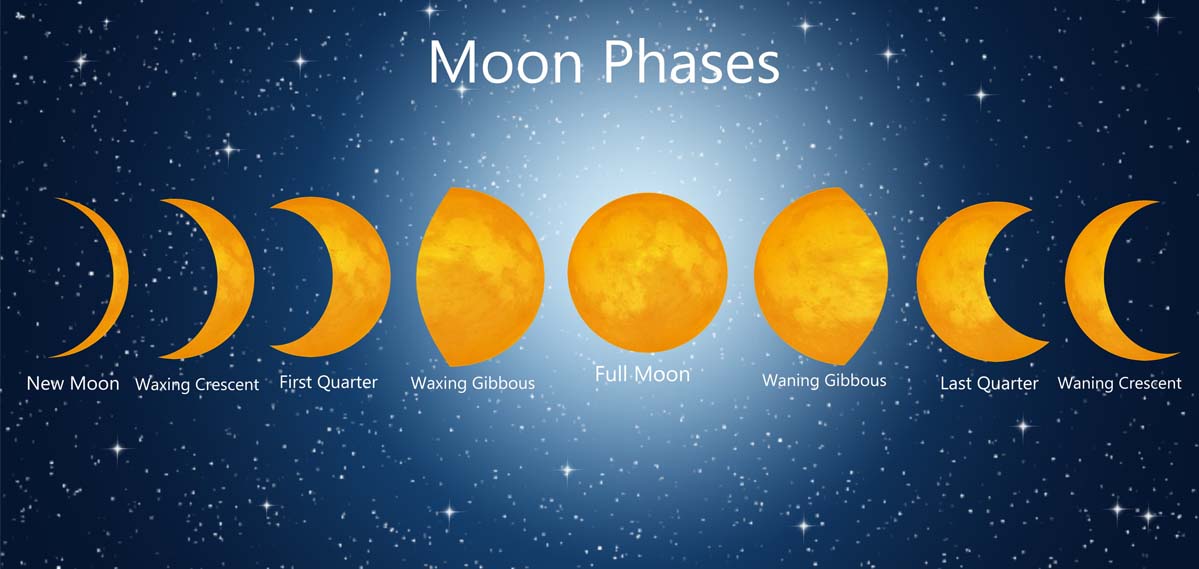
A new moon ritual is a simple monthly practice that uses the start of the lunar cycle as a reminder to set an intention and begin something new. At the new moon, the moon sits between the Earth and the Sun, and its lit side faces away from us, so the sky is at its darkest. Many traditions see this dark, quiet moment as a natural time for planting seeds, both literally and in our lives.
A new moon ritual is not a spell, and you do not need to believe anything special for it to be useful. It is a monthly pause to decide what you want to grow.
Why does the new moon matter in tradition?
In Nepal and across South Asia, the new moon day, called Aunsi or Amavasya, has long been a day for prayer, remembrance and fresh beginnings. In Buddhist practice, the new moon, like the full moon, is a traditional observance day for meditation and keeping extra precepts.
One of the most beautiful new moons in Nepal is in autumn. Laxmi Puja, the night of lights during the Tihar festival, falls on the new moon, when homes are cleaned, lamps are lit and Goddess Laxmi is welcomed for the year ahead. In 2026, Laxmi Puja is on 8 November. You can read more in our festivals and blessings section.
These are living traditions rather than scientific claims. I share them so you can understand the meaning of this time in Nepal.
When is the best time for a new moon ritual?
The best time is the evening of the new moon, or one or two evenings after it, when the first thin crescent appears. The next new moon is on Monday 9 November 2026 at 07:02 UTC, according to TheSkyLive. Because the moon is not visible at the new moon, you do not need a clear sky. The ritual works just as well indoors.
What are the steps of a simple new moon ritual?
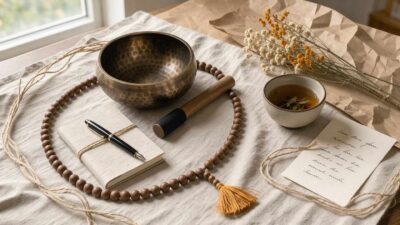
A simple new moon ritual has five steps and takes about 20 minutes. Have a notebook and pen ready.
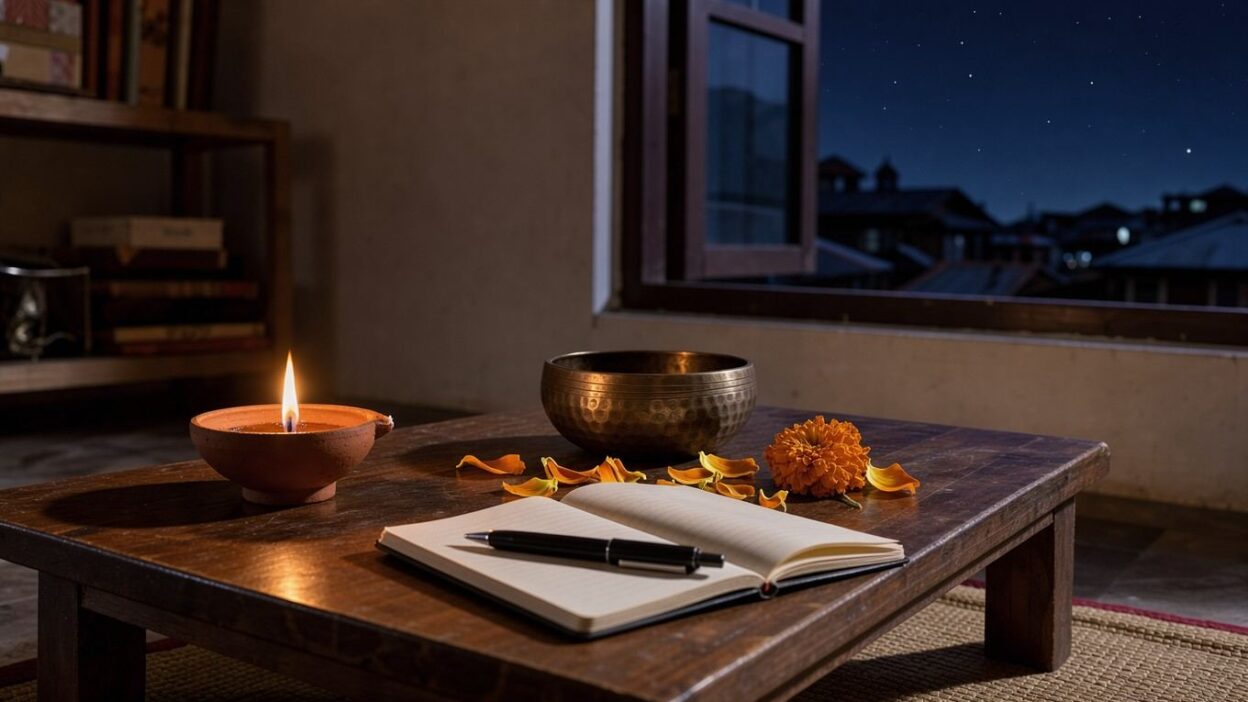
- Clear the space (3 minutes). Tidy a small corner, open a window for fresh air, and light a candle or lamp. In Nepal, cleaning the home before the new moon of Laxmi Puja is part of welcoming a fresh start. If you have a singing bowl, strike it once and listen until the sound fades.
- Notice where you are (3 minutes). Take five slow breaths. Ask yourself, without judging: how am I, really, right now?
- Write one intention (7 minutes). Choose one area of life and write one clear, positive intention in the present tense, for example: “I go to bed by 10:30 on weeknights” rather than “I want to sleep better”.
- Seal it (2 minutes). Read your intention aloud once. Take a deep breath, and as you breathe out, strike your bowl or simply place your hand on your heart.
- Plan the first step (5 minutes). Write one small action you will take this week, and exactly when and where you will do it: “When I finish dinner on Monday, I will switch my phone to night mode and put it in the kitchen.”
Why plan a first step, not just an intention?
Research suggests that intentions are far more likely to happen when you decide in advance exactly when, where and how you will act. Psychologists call these “if-then” plans, or implementation intentions. A large review of 94 studies found they had a medium-to-large positive effect on reaching goals (Gollwitzer and Sheeran, 2006).
Small steps matter too. The US National Institutes of Health recommends replacing unhelpful routines with healthier ones and rewarding yourself for small steps (NIH News in Health). The new moon gives you a monthly moment to set that small step, and the full moon two weeks later gives you a moment to look back at how it went.
What intentions can you set at the new moon?
Choose one intention that feels meaningful and realistic for the next four weeks. If you are unsure, try one of these prompts:
- What would make the next month feel calmer?
- What small habit would I like to begin?
- Who would I like to spend more time with?
- What would I like to learn or practise?
- How do I want to care for my body this month?
- What would I like to make space for at home?
How is a new moon ritual different from a full moon ritual?
A new moon ritual is about beginning and setting intentions, while a full moon ritual is about reflecting and letting go. Together they create a simple monthly rhythm: plant at the new moon, review at the full moon. For the second half of that rhythm, see my full moon ritual for reflection and release and the full moon meditation. For more simple practices, explore our daily rituals.
Can you use sound in a new moon ritual?
Yes. One bowl struck at the start, at the moment you seal your intention, and at the end gives the ritual a clear shape. If you are new to sound, read what sound healing is or try a short singing bowl meditation before you begin.
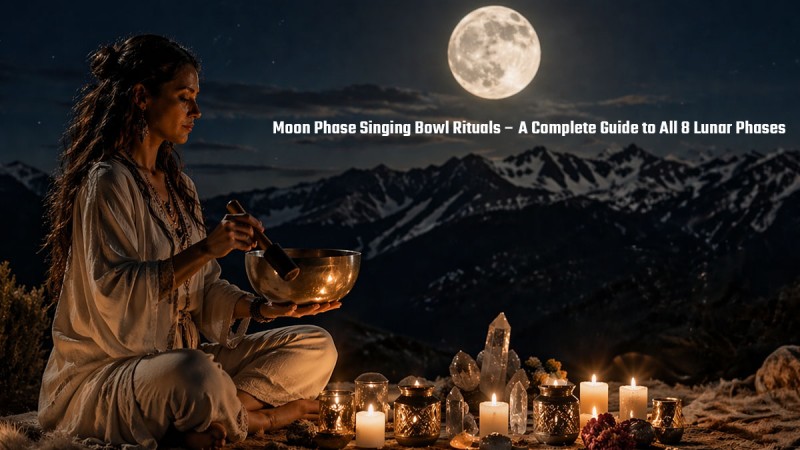
Many people keep one bowl for all their moon practice, often a full moon bowl, hand-hammered in Nepal on full moon nights. Dharma Tool shares a short ritual for each of the eight lunar phases, and to keep your new habit going day by day, try the free 30-day routine calendar.
A gentle note
Be kind to yourself if an intention does not work out. A missed goal is information, not failure. Simply notice what got in the way at the full moon, and adjust your next step at the following new moon. If you are going through a difficult time, please reach out to someone you trust or a professional. See our health disclaimer.
Frequently asked questions
What do you do on a new moon?
Many people use the new moon to set an intention for the month ahead. A simple ritual is to clear your space, take a few slow breaths, write one clear intention, seal it with a breath or sound, and plan the first small step.
When should I do a new moon ritual?
Do it on the evening of the new moon or within two days after it. The next new moon is on 9 November 2026 at 07:02 UTC.
How do you write a new moon intention?
Write one clear, positive intention in the present tense, such as “I walk for 20 minutes after lunch.” Then add a specific first step with a when and where, which research shows makes action more likely.
What is the difference between a new moon and full moon ritual?
A new moon ritual is for beginnings and setting intentions. A full moon ritual is for reflecting on the month and letting go. Many people do both to create a monthly rhythm.
Do I need to see the moon for a new moon ritual?
No. The moon is not visible at the new moon, so the ritual works indoors and on any night. A candle and a notebook are enough.
About the author
Sunita Poudel is a certified sound healer in Kathmandu, Nepal. She holds Advanced Sound Healing & Therapy (Golden Temple Singing Bowl & Healing Center, 2017), Advanced Sound Healing, 12 Chakra (Mandala Studio Yoga & Spa, 2018) and Reiki Level 1 (Empowered Academy, 2020) certifications, and has led more than 1,500 sessions.
Sunita co-founded Dharma Tool and selects every instrument it sells. Read her full story →
Sources
- Gollwitzer PM, Sheeran P. Implementation intentions and goal achievement: a meta-analysis of effects and processes. Advances in Experimental Social Psychology, 2006. University of Konstanz repository.
- Breaking Bad Habits. NIH News in Health, US National Institutes of Health.
- New moon date and time: TheSkyLive.
- Laxmi Puja 2026 date: Nepal public holiday calendar, confirmed by Sunita Poudel in Kathmandu.
This article is for general education and reflection. See our health disclaimer.