By Sunita Poudel, certified sound healer, Kathmandu · Reviewed by Sunita Poudel on 26 October 2026 · Last updated 26 October 2026
A gong bath and a sound bath are both guided relaxation sessions where you lie down and listen. The difference is the main instrument. A gong bath centres on one or more gongs, whose layered, swelling sound can feel powerful and immersive. A sound bath usually centres on singing bowls, whose clear, fading tones tend to feel gentler.
Key takeaways
- Sound bath: mainly singing bowls; gentle, clear and spacious.
- Gong bath: mainly gongs; rich, layered and often more intense.
- New to sound? A singing bowl sound bath is usually the gentler place to start.
- Many sessions combine both instruments, using bowls to open and close and the gong for the deepest part.
I am Sunita Poudel, a certified sound healer in Kathmandu, Nepal. People often ask me whether they should try a gong bath or a sound bath first. Both can be deeply relaxing, but they feel quite different. In this guide I compare the two side by side, so you can choose the one that suits you.
What is a gong bath?
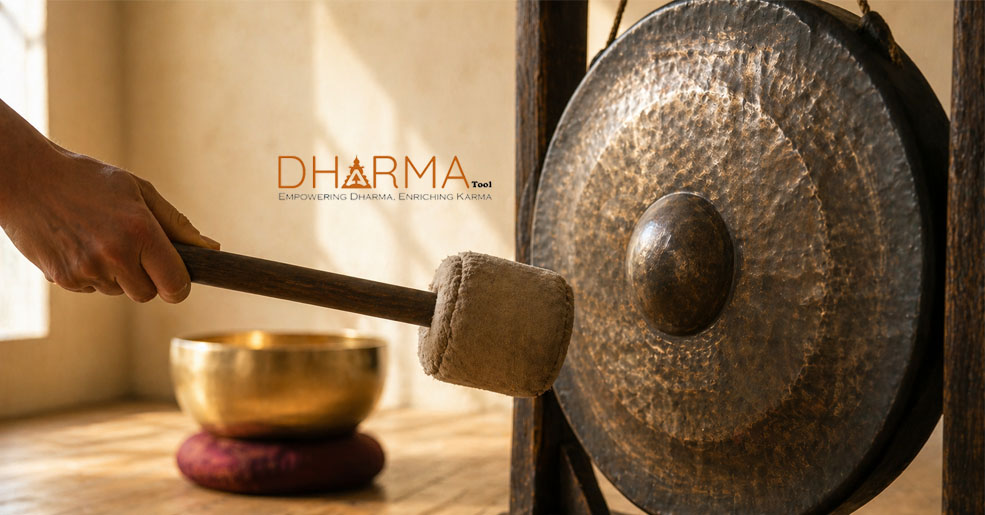
A gong bath is a relaxation session in which you lie down while a practitioner plays one or more gongs, letting waves of sound wash over you. A gong is a large, flat or slightly curved metal disc that hangs from a stand. When it is played softly and then gradually built up, it produces many layers of tone at once, rising and falling like the sea.
Because the sound is so rich and changes constantly, the mind has little to hold on to. Many people find this helps them stop thinking and simply let go. Others find it intense at first.
What is a sound bath?
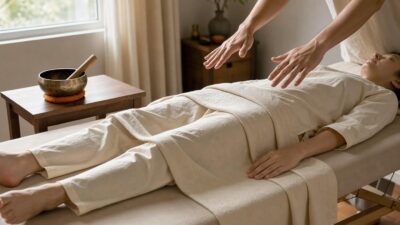
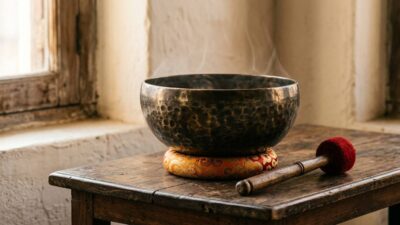
A sound bath is a relaxation session in which you lie down while a practitioner plays instruments around you, most often Himalayan singing bowls. Each bowl produces a clear tone that slowly fades into silence, giving the mind a simple, steady point of focus. I explain sound baths fully in my guide, what is a sound bath.
Gong bath vs sound bath: a side-by-side comparison
| Sound bath (singing bowls) | Gong bath | |
|---|---|---|
| Main instrument | Singing bowls, sometimes with chimes and voice | One or more gongs |
| Sound character | Clear tones that fade into silence | Layered, swelling waves of sound |
| Intensity | Gentle and spacious | Can build to powerful and immersive |
| How the mind responds | Follows each tone, like a guided meditation | Gives up following and lets go |
| Often suits | Beginners, sound-sensitive people, evening rest | People wanting a deeper, more immersive experience |
| Typical length | 45 to 90 minutes | 45 to 90 minutes |
How do they feel different?
A sound bath tends to feel soothing and centring, while a gong bath tends to feel enveloping and, at its peak, almost overwhelming in a way many people find releasing.
With singing bowls, there are clear moments of sound and silence, and you can follow each tone to its end. With a gong, the sound can build until it fills the whole room and seems to come from everywhere at once. Some people describe feeling the vibration in their chest or through the floor. Others feel emotion rise as the sound peaks, and then a deep stillness as it fades.
Neither is better. They simply offer different paths to rest. For why sound affects us so strongly, read how sound affects the brain.
Which should you try first?
If you are new to sound, sensitive to loud sounds, or want something calming before sleep, start with a singing bowl sound bath. If you already enjoy sound practice and want a deeper, more immersive experience, try a gong bath.
- Choose a sound bath if you are anxious, easily startled, very tired, or new to meditation.
- Choose a gong bath if you find it hard to switch off your thoughts and want sound strong enough to carry you.
- Choose a combined session if you want the best of both: bowls to ease you in and out, and the gong in the middle.
Can gongs and singing bowls be used together?
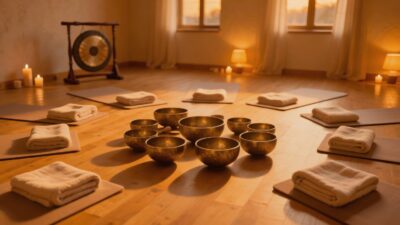
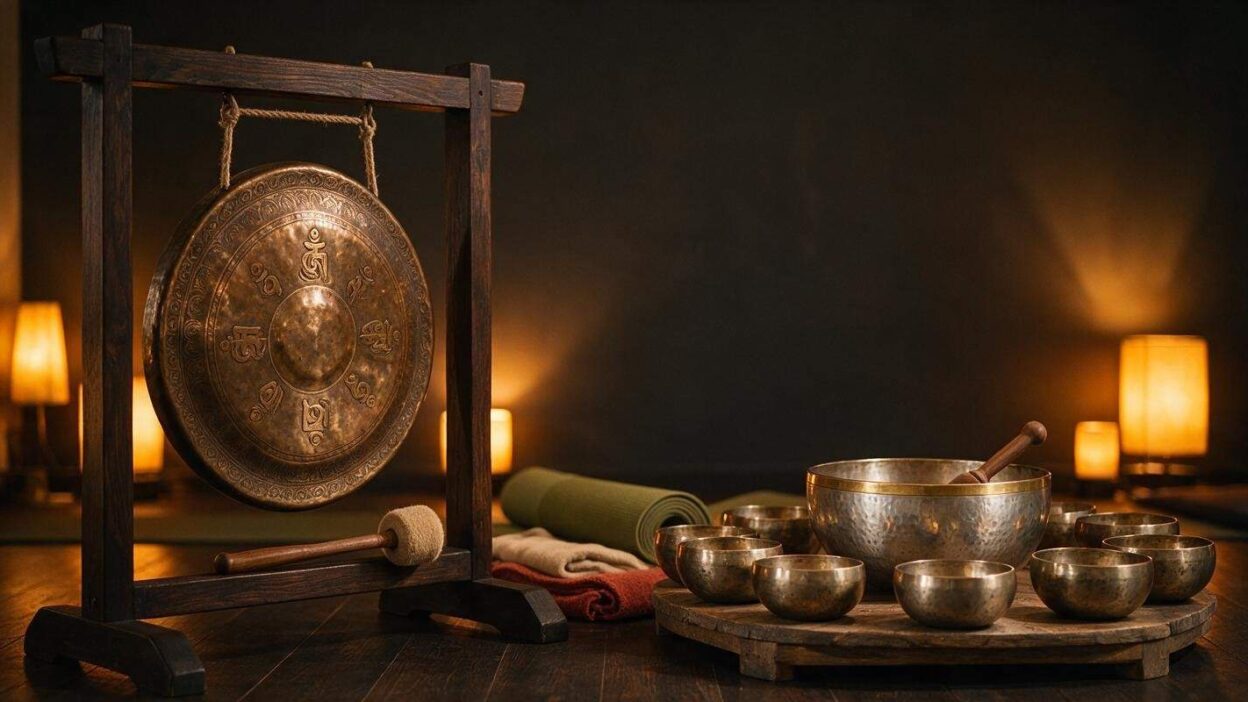
Yes. Many practitioners combine them, opening with singing bowls, building to the gong, and closing again with bowls. This structure lets the body settle gently before the deeper part of the session, and brings it back softly afterwards. Dharma Tool’s practitioner guide shows how to combine a gong and bowls in one session, with timing and layout. If you teach or lead sessions, see our leading a sound bath section.

If you are building your own practice space, you can explore hand-forged Tibetan gongs made in Nepal, or design a custom gong to your preferred size.
Are gong baths safe?
Gong baths are safe for most healthy adults, but because gongs can become loud, volume and distance matter. Long or repeated exposure to sounds at or above 85 decibels can damage hearing, according to the US National Institute on Deafness and Other Communication Disorders. A good practitioner keeps the gong at a comfortable level and never plays it close to anyone’s head.
Please check with your doctor first, and choose a gentle singing bowl session instead, if you:
- are pregnant
- have epilepsy or a seizure disorder
- have a pacemaker or another implanted device
- have tinnitus, hearing loss or sensitivity to sound
- live with trauma, panic attacks or a serious mental health condition
In any session you can move further from the gong, cover your ears or leave the room. Your comfort always comes first. See our health disclaimer.
Frequently asked questions
What is the difference between a gong bath and a sound bath?
Both are relaxation sessions where you lie down and listen. A gong bath centres on gongs, which create layered, swelling waves of sound. A sound bath usually centres on singing bowls, whose clear tones fade gently into silence.
Is a gong bath more intense than a sound bath?
Usually, yes. Gongs can build to a powerful, immersive sound that fills the room, while singing bowls tend to feel gentler and more spacious. A skilled practitioner adjusts the intensity to the group.
Which is better for beginners?
A singing bowl sound bath is usually the gentler starting point, especially for people who are anxious or sensitive to loud sounds. A gong bath can be a good next step once you feel comfortable with sound practice.
Can a gong bath be too loud?
It can, if a gong is played very strongly or very close. Long exposure to sounds above 85 decibels can harm hearing. Choose a practitioner who keeps the volume comfortable, and move away if it feels too loud.
Are gongs and singing bowls used together?
Often, yes. Many sessions open and close with singing bowls and use the gong for the deepest part in the middle, combining gentle and immersive sound.
About the author
Sunita Poudel is a certified sound healer in Kathmandu, Nepal. She holds Advanced Sound Healing & Therapy (Golden Temple Singing Bowl & Healing Center, 2017), Advanced Sound Healing, 12 Chakra (Mandala Studio Yoga & Spa, 2018) and Reiki Level 1 (Empowered Academy, 2020) certifications, and has led more than 1,500 sessions.
Sunita co-founded Dharma Tool and selects every instrument it sells. Read her full story →
Sources
- Noise-Induced Hearing Loss. National Institute on Deafness and Other Communication Disorders, US National Institutes of Health.
- National Center for Complementary and Integrative Health. 5 Things To Know About Relaxation Techniques for Stress. NCCIH, US National Institutes of Health.
This article is for general education and does not replace medical advice. See our health disclaimer.